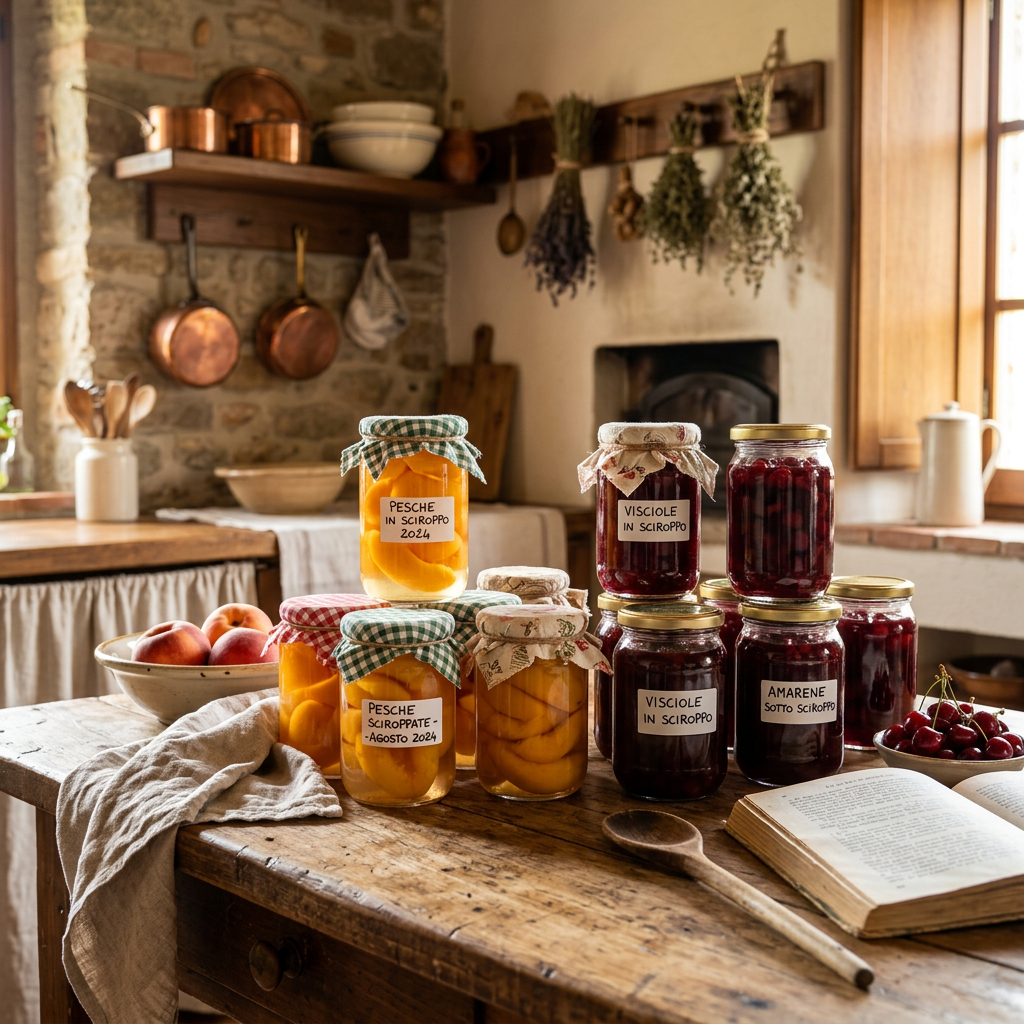
conservazione frutta estiva | conserve frutta antiche | pesche sciroppate | visciole sotto zucchero al sole
“Nonna Lucia, ma come fai a sapere ancora di pesca a gennaio?” — Una domanda che da bambina rivolgevo ogni inverno al barattolo sul ripiano più alto della dispensa.
L’estate è nel suo massimo splendore. Le giornate si allungano all’inverosimile, come se il sole avesse deciso di fare gli straordinari senza chiedere permesso, e i campi esplodono di colori e profumi che mettono in crisi chiunque abbia anche solo un briciolo di anima romantica. È il momento dell’anno in cui la natura ci regala una dispensa a cielo aperto: frutti maturi, succosi, profumati — una sinfonia organolettica che chi compra le pesche al supermercato a novembre, pallide e insapori come polistirolo biologico, non potrà mai davvero comprendere.
Stiamo parlando di stagionalità, quella parola che oggi suona quasi rivoluzionaria, ma che fino a qualche decennio fa era semplicemente la realtà di ogni famiglia italiana. E fu proprio questa realtà — abbondante, generosa e un pochino tiranna — a costringere le nonne d’Italia a diventare chimiche, ingegnere alimentari e artiste della conservazione, tutto in una volta sola.
⸻⸻⸻
Quando la Campagna Era la Dispensa: La Vita Contadina e la Frutta di Stagione
Una volta, in ogni casa contadina che si rispettasse, c’erano piante da frutto di ogni tipo: mele, pere, fichi, susine, ciliegie, pesche, noci — un catalogo botanico vivente che bastava a sfamare una famiglia intera e il vicinato di turno. L’idea di andare dal fruttivendolo era non solo economicamente impraticabile per la maggior parte delle famiglie, ma anche filosoficamente incomprensibile: perché mai comprare ciò che la terra ti offre gratis?
Il vero problema arrivava proprio quando la terra decideva di essere generosa in modo quasi offensivo: casse e casse di pesche mature contemporaneamente, chili di visciole che cadevano dai rami con l’urgenza di chi ha un appuntamento. Niente poteva essere sprecato. L’etica del non si butta niente non era una filosofia zen importata dal Giappone — era semplicemente l’unica opzione disponibile.
Fu così che nacquero, per necessità e genio popolare, i metodi di conservazione della frutta estiva: tecniche raffinate, tramandate di generazione in generazione, capaci di portare il sapore dell’estate dritta nel cuore dell’inverno. E se oggi le chiamiamo “conserve artigianali” e le vendiamo a prezzi da boutique gastronomica, allora erano semplicemente sopravvivenza con stile.
⸻⸻⸻
Nonna Lucia e la Magia della Dispensa: Un Ricordo Che Profuma di Pesca
“Si conserva tutto, si butta niente, e si ringrazia sempre” — il mantra di nonna Lucia, donna di poche parole e mani sempre occupate.
Mia nonna si chiamava Lucia. Un nome semplice, diretto, luminoso — proprio come lei. Aveva le mani grandi e forti di chi ha impastato pane per cinquant’anni, ma erano anche mani capaci di una delicatezza sorprendente quando lavorava la frutta. La ricordo in cucina ogni estate, avvolta in un grembiule a fiorellini che probabilmente aveva una storia più antica di me, intenta a orchestrare quella che, per una bambina, sembrava una cerimonia misteriosa e solenne.
La dispensa di nonna Lucia era un luogo sacro. Scaffali alti fino al soffitto, barattoli allineati come soldatini con le etichette scritte a mano — pesche sciroppo agosto 1987, visciole sole luglio 1989 — una cronologia commestibile della sua vita. Ogni barattolo era una promessa: “anche quando fuori fa freddo e le piante sono spoglie, l’estate è qui, al sicuro, che ti aspetta.”
Non l’ho mai sentita parlare di sostenibilità, filiera corta o chilometro zero. Non ne aveva bisogno. Lei la praticava semplicemente, ogni giorno, con la naturalezza di chi ha imparato dal proprio territorio e non si è mai permessa il lusso dell’ignoranza alimentare.
⸻⸻⸻
Pesche Sciroppate Fatte in Casa: La Ricetta Antica Che Non Tramonta Mai
Perché le Pesche Sciroppate Sono il Metodo di Conservazione della Frutta Estiva per Eccellenza
Le pesche sciroppate sono la conserva che ogni nonna italiana ha fatto almeno una volta nella vita, e che ogni nipote ricorda con una nostalgia viscerale e difficile da spiegare. Non stiamo parlando di quelle lattine industriali color salmone spento che popolano i ripiani dei supermercati — quella roba è un insulto alla pesca, non una sua celebrazione. Stiamo parlando di altro. Stiamo parlando di frutta raccolta alla giusta maturazione, quando la polpa cede al tatto con una dolcezza quasi imbarazzante, e il profumo ti segue per tutta la cucina come un cane fedele.
Come Si Preparano le Pesche Sciroppate: Il Metodo Tradizionale Passo per Passo
La procedura, nelle mani di nonna Lucia, era un rito quasi meditativo. Prima di tutto, la selezione: solo le pesche in piena maturazione, quelle che hanno vissuto abbastanza sotto il sole da sviluppare tutto il loro potenziale aromatico. Una pesca immatura in un barattolo di sciroppo è come un attore che recita senza aver studiato la parte — tecnicamente è lì, ma manca di anima.
Si sbucciavano a mano — niente pelapatate, niente scorciatoie — poi si aprivano a metà, via il nocciolo, e si tuffavano in acqua bollente per un paio di minuti: giusto il tempo di ammorbidirle senza farle cedere, perché la pesca sciroppata deve avere una sua dignità strutturale. Poi si tagliavano ancora a metà, si disponevano con cura in barattoli di vetro sterilizzati — la sterilizzazione era quasi liturgica, nessun compromesso — e si coprivano fino all’orlo con uno sciroppo di acqua e zucchero in proporzioni che solo la memoria delle mani conosce davvero.
Barattoli chiusi ermeticamente, si immergevano in una grande pentola d’acqua e si portavano a ebollizione: il bagno maria, antico e infallibile metodo per creare il sottovuoto e sigillare la frutta in una bolla di tempo sospeso. Il clic del tappo che si chiudeva raffreddandosi era, per nonna Lucia, il suono della soddisfazione.
Come Si Usavano le Pesche Sciroppate in Inverno
Consumate poi nel corso di tutto l’inverno — come fine pasto, come base per dolci al cucchiaio, posate accanto a una quenelle di crema pasticcera in qualche domenica festiva — le pesche sciroppate avevano il potere quasi magico di restituire il profumo dell’estate in pieno gennaio. Un boccone e ti ritrovavi in agosto, sotto un albero, con il succo sul mento e nessuna preoccupazione. Non è conservazione della frutta, è conservazione di un’emozione.
⸻⸻⸻
Visciole Sotto Zucchero al Sole: Il Metodo di Conservazione Più Romantico che Esista
Cosa Sono le Visciole e Perché Sono Così Difficili da Trovare Oggi
E poi ci sono le visciole. Le Visciole con la V maiuscola, perché meritano rispetto. Chiamate volgarmente ciliegie selvatiche, le visciole (Prunus cerasus) sono i parenti poveri e nobili allo stesso tempo della ciliegia domestica: più piccole, più acide, più profonde nel sapore, e dotate di un’intensità aromatica che la ciliegia da supermercato si sogna la notte. Trovarle oggi è una missione degna di Indiana Jones — le piante selvatiche di visciole sono diventate rare, sacrificate all’omologazione agricola e alla mania per le varietà standardizzate.
Ecco perché questo è il sapore che mi manca di più. Non un rimpianto generico per “le cose di una volta” — quel tipo di nostalgia vaga che serve a poco — ma la mancanza fisica, concreta, di un gusto preciso che probabilmente non assaggerò mai più con quella stessa intensità. È uno di quei dolori piccoli e dignitosi che si portano in silenzio.
La Ricetta delle Visciole al Sole di Nonna Lucia: Pazienza Come Ingrediente Principale
Il metodo di conservazione delle visciole era, ed è, una poesia lenta. Dopo la raccolta — un’operazione che richiedeva scale, braccia tese e una certa dose di equilibrio precario — si separavano dai piccioli con la stessa cura con cui si sfoglierebbe un libro antico. Poi, dentro i barattoli da conserva, a strati alternati con lo zucchero: visciole, zucchero, visciole, zucchero — una sedimentazione quasi geologica.
E poi si aspettava. I barattoli venivano portati fuori, al sole diretto, e lì restavano per almeno dieci giorni. Il calore del sole — non un forno, non un microonde, ma il sole, quello vero, quello dell’estate italiana che non scherza — scioglieva lentamente lo zucchero, che si fondeva con il succo delle visciole in uno sciroppo viola scuro, quasi violaceo, di una bellezza commovente. Le bacche si ammorbidivano, si gonfiavano di dolcezza, perdevano l’acidità selvatica e acquistavano una complessità di gusto impossibile da replicare artificialmente.
Le Visciole al Sole: Un Lusso Contadino da Consumare con Parsimonia
Visto la produzione limitata delle piante selvatiche, nonna Lucia riusciva a fare al massimo due o tre barattoli per stagione. Erano trattati come reliquie — e non è un’esagerazione. Consumate con cura e parsimonia, spesso accompagnate da una nuvola di panna montata o una pallina di gelato alla vaniglia, erano il dessert delle grandi occasioni, la conclusione di un pranzo domenicale importante, il premio riservato agli ospiti di riguardo.
“Non aprire quel barattolo senza una buona ragione” — nonna Lucia, con una fermezza che non ammetteva discussioni.
Una buona ragione, per lei, poteva essere un compleanno, una guarigione, un ritorno atteso da tempo. Le visciole al sole erano la misura di ciò che merita di essere celebrato. In questo, erano più filosofia che cucina.
⸻⸻⸻
Conservazione della Frutta Estiva e Sostenibilità: Perché Tornare alle Abitudini dei Nostri Nonni Ha Senso
Il Problema del Cibo Fuori Stagione: Impatto Ambientale e Perdita di Gusto
Oggi siamo stati educati — o forse rieducati nel modo sbagliato — a credere che avere tutto tutto l’anno sia un diritto acquisito, quasi un progresso civile. Fragole a Natale, pesche a febbraio, pomodori che sembrano palloncini rossi ma hanno il sapore dell’aria: il supermercato moderno è un monumento alla disponibilità permanente e al gusto azzerato.
L’impatto ambientale è documentato e pesante: serre riscaldate energivore, trasporti intercontinentali, packaging industriale, catene del freddo che bruciano risorse. Ma c’è un costo che si misura meno facilmente, ed è quello sensoriale: il gusto di un frutto fuori stagione è quasi sempre una bugia. Una pesca raccolta verde per sopportare il trasporto e maturata artificialmente in cella non è una pesca — è una sua controfigura poco convincente.
Cosa Possiamo Imparare dai Metodi Antichi di Conservazione della Frutta
I metodi di conservazione della frutta estiva che ci hanno tramandato le nostre nonne non erano solo tecniche alimentari — erano una visione del mondo. Mangiare la pesca sciroppata a dicembre non era rinuncia, era intelligenza: sapere aspettare, sapere conservare, sapere che ogni cosa ha il suo tempo e il suo senso. Le visciole al sole non erano un ripiego — erano la prova che la pazienza ha un sapore e che vale la pena coltivarlo.
Recuperare queste pratiche oggi non significa rinnegare la modernità o fingere di vivere in un documentario sulla vita rurale. Significa scegliere: scegliere frutta di stagione quando è possibile, scegliere di farne una conserva invece di buttarla quando abbonda, scegliere di insegnare a un bambino che il barattolo sul ripiano della dispensa è una piccola magia fatta di tempo, sole e cura.
Non sarebbe forse più bello — e più sano, e più saporito — tornare almeno un poco alle abitudini di nonna Lucia? A quelle lavorazioni lente che richiedevano tempo ma restituivano sapori che nessuna industria alimentare è ancora riuscita a brevettare?
A voi la risposta. Io, nel dubbio, ho già sterilizzato i barattoli.
⸻⸻⸻
In Sintesi: I Metodi Antichi di Conservazione della Frutta Estiva da Riscoprire
La conservazione della frutta estiva con metodi tradizionali è una pratica che unisce sapere antico, sostenibilità reale e risultati gastronomici inarrivabili. Le pesche sciroppate fatte in casa e le visciole sotto zucchero al sole sono solo due esempi di un patrimonio culinario italiano che merita di essere custodito, praticato e raccontato — ai figli, ai nipoti, a chiunque voglia capire cosa significa davvero mangiare bene.
Hai anche tu un ricordo legato alle conserve di frutta dei tuoi nonni? Raccontamelo nei commenti — le storie più belle meritano di diventare ricette.



Lascia un commento